Gentle Postpartum Exercises for Diastasis Recti & Core Strength
Discover safe, gentle postpartum exercises to strengthen your core with diastasis recti. Learn breathing techniques, core exercises, and what to avoid for recovery.
Bringing Your Core Back: Gentle Exercises Postpartum with Diastasis Recti for Core Strengthening
It was 3 a.m. when I first really looked at my belly post-baby. Noah was finally asleep (a miracle!) and in the dim hallway light, I noticed it. My stomach seemed to… separate. A little ridge down the middle. What is this? I thought. My first instinct was panic, then a wave of shame. I had just grown a human, birthed him, and was somehow already failing at getting my body back.
Real talk — nobody prepares you for the sheer strangeness of your postpartum body. It’s not just the stretch marks or the phantom kicks. It’s the way your core, the very center of your being, feels like it’s forgotten how to work. If you’re experiencing something similar, let me tell you right now: you are not alone. And this feeling isn’t a sign of failure.
So, What's Going On Down There? Understanding Diastasis Recti
Let’s break it down. Diastasis Recti (DR) is the separation of the rectus abdominis muscles, those "six-pack" muscles that run down the front of your abdomen. During pregnancy, as your uterus expands, these muscles stretch and can even separate, especially along the linea alba (the connective tissue that runs down the middle).
It’s incredibly common. Research suggests a huge percentage of women experience it to some degree postpartum. It’s a natural response to the incredible feat your body has accomplished. For some, the gap is small and closes on its own. For others, it can persist, leading to a variety of issues.
Common signs and symptoms to watch for include:
- That noticeable ridge or separation down the middle of your abdomen.
- Your belly pooching out, even if you’re not eating much or have lost the baby weight.
- Difficulty with certain movements, like rolling out of bed or getting up from a seated position.
- Lower back pain that just won't quit.
- A feeling of "floppiness" or lack of support in your core.
- Urinary leakage when you cough, sneeze, or jump.
It’s not just about aesthetics; it’s about function. A weakened core can impact your posture, contribute to back pain, and affect your overall physical ability.
When Can I Start Moving Again? Patience and Professional Guidance
This is where things get tricky, and honestly, where I made a few mistakes early on. My eagerness to "bounce back" had me doing things I shouldn’t have. The truth is, there's no one-size-fits-all answer to when you can start your postpartum belly recovery exercises.
The most important thing? Listen to your body. It just went through a marathon, remember? Your recovery is unique. Pushing too hard, too soon, can actually set you back.
Before diving into any new exercise routine, especially if you suspect DR, it’s crucial to consult your doctor or a qualified physical therapist specializing in postpartum recovery. They can assess your specific situation, measure the separation, and guide you on what’s safe and effective for you. They are your best allies in this journey.
The Core of It All: Breathing and Your Pelvic Floor
Forget the crunches for now. The absolute foundation of safe core strengthening postpartum, especially with diastasis recti, is reconnecting with your breath and your pelvic floor. These two systems work together as your body’s natural corset.
Diaphragmatic Breathing: This is more than just taking a deep breath. It’s about using your diaphragm to massage your organs and gently engage your deep core muscles.
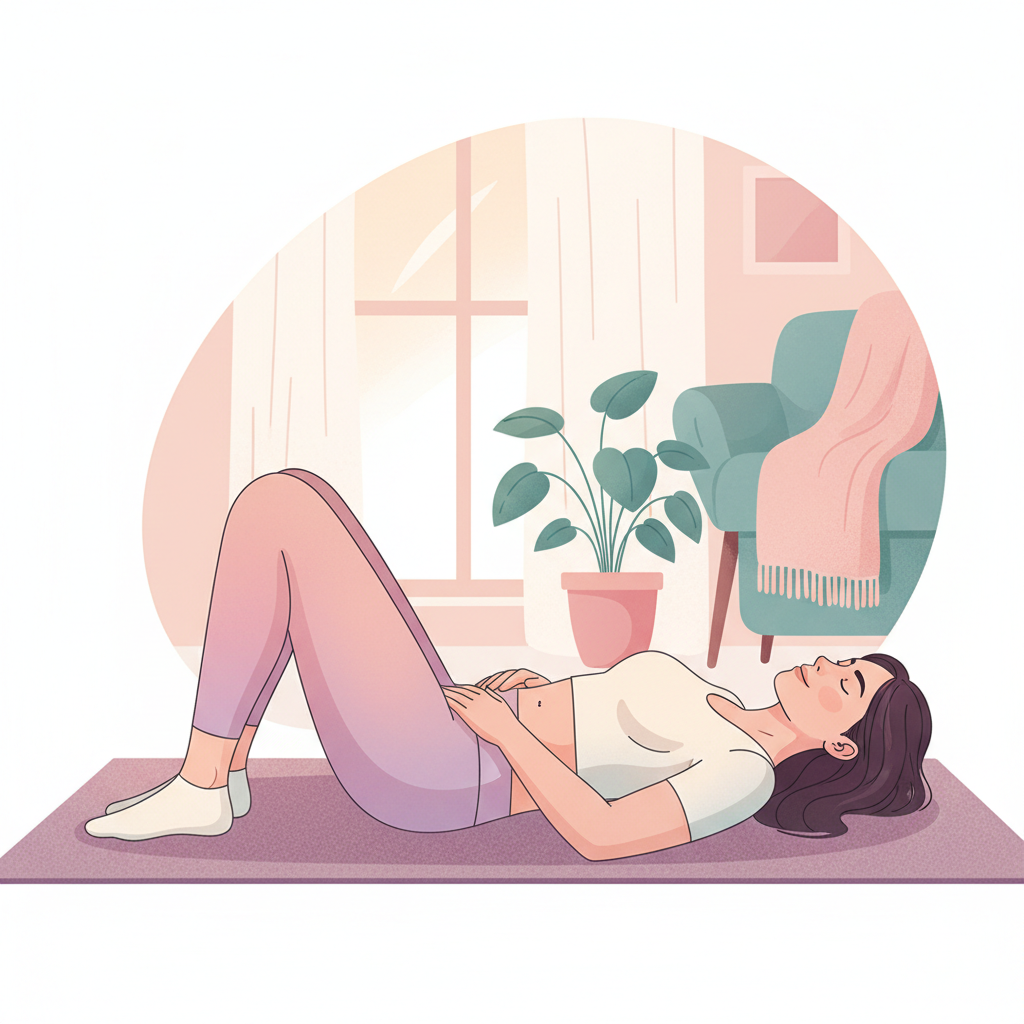
- Lie on your back with your knees bent and feet flat on the floor. You can also do this seated or standing.
- Place one hand on your chest and the other on your belly, just below your ribs.
- Inhale deeply through your nose, feeling your belly rise like a balloon. Your chest hand should move very little.
- Exhale slowly through your mouth, gently drawing your belly button towards your spine. Imagine you’re deflating that balloon.
- Focus on feeling the deep abdominal muscles engage on the exhale. This is your transverse abdominis doing its job.
Pelvic Floor Activation: Your pelvic floor muscles are like a hammock supporting your pelvic organs. Re-learning how to engage and relax them is key for core stability and can help with urinary incontinence.
- While breathing diaphragmatically, imagine you are trying to stop the flow of urine mid-stream and also trying to hold back gas.
- Gently lift and squeeze those internal muscles. You should feel a subtle tightening.
- Hold for a few seconds, then relax completely. It’s important to be able to fully relax these muscles, not hold tension.
- Practice this frequently throughout the day, even for short bursts.
Gentle Exercises for Diastasis Recti Core Strengthening
Once you’ve got a handle on your breath and pelvic floor, you can start introducing these gentle exercises. Remember, the focus is on quality over quantity, and on avoiding any exercises that cause your belly to bulge or cone outwards.
Here are some fantastic safe core exercises postpartum to get you started:
-
Heel Slides: Still lying on your back with knees bent.
- Inhale and prepare.
- As you exhale, gently engage your core and pelvic floor, and slowly slide one heel away from you, keeping your foot on the floor.
- Inhale as you slide your heel back to the starting position.
- Alternate legs. Focus on keeping your lower back stable and not arching.
-
Pelvic Tilts: Lying on your back with knees bent.
- Inhale and relax your back slightly.
- As you exhale, gently flatten your lower back against the floor by tilting your pelvis up slightly. Think of tucking your tailbone a little.
- Hold briefly, then inhale and return to a neutral position.
-
Modified Bridges: This one feels more traditional but is adapted for DR.
- Lie on your back with knees bent, feet flat on the floor, hip-width apart.
- Inhale, setting up your breath.
- Exhale as you gently engage your pelvic floor and transverse abdominis, and slowly lift your hips off the floor, aiming for a straight line from your knees to your shoulders. Avoid arching your back.
- Inhale at the top, and exhale as you slowly lower back down, one vertebra at a time.
-
Bird-Dog (Modified): This is great for improving stability.
- Start on your hands and knees in a tabletop position. Ensure your wrists are under your shoulders and knees under your hips.
- Inhale and find a neutral spine.
- Exhale and gently engage your core.
- As you exhale, slowly extend one arm straight forward and the opposite leg straight back. Keep your hips level and avoid arching your back or letting your belly sag.
- Inhale to return to the starting position.
- Alternate sides. If full extension is too much, start by just lifting one leg, or just reaching one arm.
Remember, if at any point you see or feel a "doming" or "bulging" sensation in your midline, stop. That’s a sign you’re putting too much pressure on the separated muscles.
What NOT to Do: Avoiding Setbacks
Just as important as knowing what to do is knowing what not to do. Some common exercises, well-intentioned as they may be, can actually worsen diastasis recti and set back your postpartum belly recovery.
Here’s what to steer clear of in the early stages:
- Full Crunches and Sit-ups: These put direct, intense pressure on your abdominal muscles and can exacerbate the separation.
- Planks (Full): While planks are amazing, a traditional full plank puts a lot of strain on the linea alba. You can modify these later on, but start with gentler options.
- Double Leg Lowers: Lowering both legs simultaneously from a lying position creates significant strain on your core.
- Heavy Lifting: Go easy on lifting heavy objects, including older siblings, until cleared by your healthcare provider.
- Any exercise that causes coning/doming: I know I’m repeating myself, but this is the biggest red flag. If you see a bulge down your midline, stop.
Moving Forward: Progressing Safely and Celebrating Wins
Rebuilding your core strength postpartum with DR is a journey, not a race. The key to long-term success is consistency and patience.
What are the signs you can gradually increase the intensity or duration of your exercises?
- You can perform the current exercises with good form and without bulges.
- Your core feels more supportive.
- You’re experiencing less back pain.
- You feel more confident in your movements.
As you get stronger, you can gradually progress by:
- Increasing the number of repetitions.
- Holding the exercises for longer.
- Making the movements slower and more controlled.
- Eventually, progressing to more challenging variations like full planks, bird-dog with full extension, and even controlled medicine ball work, all under professional guidance.
And please, don’t be afraid to seek out professional help. A physical therapist specializing in postpartum care can provide personalized guidance, manual therapy, and a roadmap for your recovery that will make all the difference. They can help you understand your body’s healing process and ensure you’re progressing safely.
This journey of postpartum recovery is incredible, and it’s okay to feel overwhelmed or unsure. The fact that you’re here, looking for information and wanting to care for yourself, is a huge step. Be kind to yourself, celebrate every small victory, and remember that your body is strong and resilient. You’ve got this.