Postpartum Rage: Explaining Intense Anger to Your Partner
Understand postpartum rage beyond just feeling 'mad.' Learn how to talk to your supportive but confused partner about intense irritability, triggers, and how to seek help.
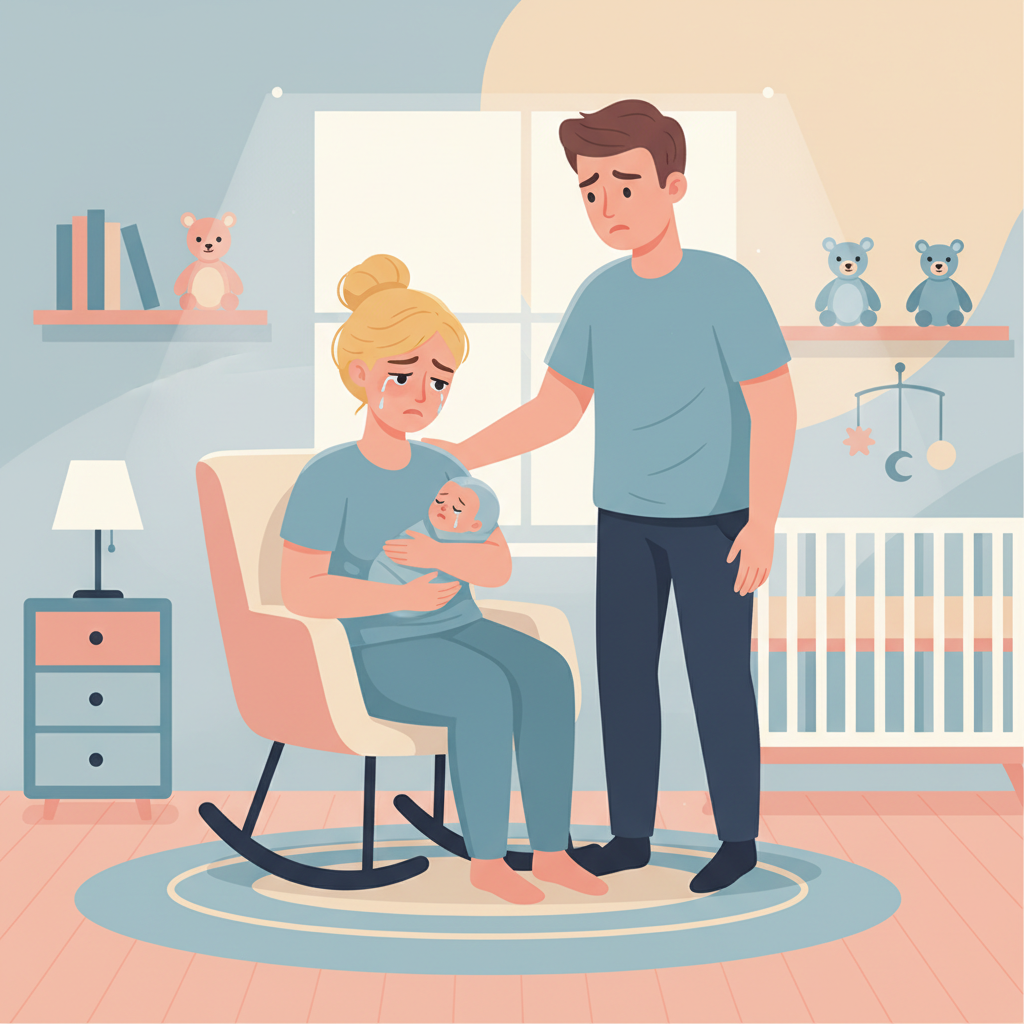
When "Mommy's Mad" Becomes Postpartum Rage: Talking to Your Partner
It was 10:17 p.m. and Noah, my sweet, usually predictable 9-month-old, had decided to stage a one-baby protest against sleep. Every gentle pat, every soft shush, every pacifier offered back to his mouth was met with a fresh wave of wails. My husband, Mark, was already asleep – he’d had a brutal day at work and I’d been “on duty” since he’d gotten home. And then, it hit me. Not just a wave of exhaustion, but a hot, stinging surge of anger. A voice inside my head screamed, Just leave him alone! Why won't he just sleep?! It was a terrifying thought, and I immediately felt a flush of shame. This was postpartum rage, and I had no idea what to do about it.
Look, we hear a lot about postpartum depression. Tears, sadness, overwhelming fatigue. And that’s absolutely real and valid. But the postpartum rage? That one seemed to hit me like a ton of bricks when I least expected it. It’s so much more than just feeling a little “mad” because you’re tired.
More Than Just Feeling 'Mad'
Honestly, explaining postpartum rage to my supportive but confused partner felt like trying to describe a color no one else could see. It’s this sudden, intense irritability that can explode over the smallest things. The sound of a dripping faucet. The way the laundry is folded. The very existence of a perfectly healthy baby who, at that moment, feels like a tiny, tyrannical dictator. My entire body felt wired, on edge.
Common Triggers and Emotions
The triggers felt so ridiculous, which only made the ensuing anger feel more shameful. I’d snap at Mark for leaving a light on. I’d feel a surge of fury when Noah cried because his milk was one degree too warm. Underneath the flash of anger, there was often a deep well of anxiety, guilt, and a profound sense of being overwhelmed. It was like a pressure cooker. I eventually learned how to talk to your OBGYN about sudden rage ppd symptom, which was a crucial step.
Why It's Hard to Talk About
The hardest part for me was how isolated it made me feel. I knew I was supposed to be this calm, nurturing mother. Instead, I was battling internal storms that felt monstrous.
Guilt and Shame
The guilt was suffocating. I loved Noah more than words could say. But these angry thoughts? They felt like proof I was a terrible mother. I was terrified Mark would see me differently. That he’d think I was broken or fundamentally incapable.
Fear of Judgment
Would he think I didn't love our son enough? Would he think I was going crazy? This fear kept me quiet, letting the anger simmer and then explode in ugly, unproductive bursts.
Difficulty Finding the Right Words
How do you articulate that you’re experiencing postpartum rage when you don’t even fully understand it yourself? The words felt insufficient, clumsy. "I'm just really angry" didn't capture the bone-deep exhaustion or the hormonal chaos.
Opening the Conversation With Your Partner
So, how do you even start to bridge that gap? How do you help your partner understand what’s happening inside your head and body? Real talk: it’s incredibly hard, but crucial.
Choosing the Right Time and Place
Don’t try to have this conversation in the middle of a midnight feeding or when you're both exhausted and stressed. Pick a time when you're both relatively calm and have a moment to focus. Maybe after Noah is asleep for the night, or during a weekend morning when you can have coffee together.
Using 'I' Statements
This is motherhood-101 communication, but it’s extra important here. Instead of saying, "You always make me so mad," try "I've been feeling overwhelmingly angry lately, and I'm scared by it." Focus on your experience and your feelings.
What to Say When You Don't Know What to Say
You don't need a perfect explanation. Start with honesty. "Hey, I've been struggling with some intense feelings of anger recently, and it's really bothering me. I'm not sure why it's happening, but I wanted to talk to you about it." That’s enough. Just opening the door is a huge first step.
Helping Your Partner Understand
Mark was amazing, but he was also confused. He'd see me erupt over something small and genuinely not understand the intensity of my reaction.
What Postpartum Rage Is NOT
This is vital. Postpartum rage is not personal anger directed at your partner, or your baby, necessarily. It's a symptom of a much larger, hormonal and emotional upheaval. It’s not a reflection of his actions, even if things he does accidentally trigger it. It’s a sign that your system is completely out of whack.
Explaining the Physical and Hormonal Shifts
Our bodies have been through so much. Pregnancy, birth, and now the constant demands of a newborn. Hormones are doing a wild dance. Research suggests that the rapid drop in estrogen and progesterone after birth can significantly impact mood regulation. It’s a biological storm. Explaining that this is often hormonal and not a character flaw can be incredibly freeing. Learning about managing breast milk supply fluctuations postpartum also helped me understand the hormonal shifts.
Sharing Resources Together
Sometimes, it’s easier to absorb information from a neutral source. Mark and I found some great articles and podcasts about navigating postpartum emotions and the section on postpartum rage and anger was particularly helpful for him. Seeing that other partners had questions too, and that there were resources explaining it, made him feel more equipped.
Signs It's Time to Seek Professional Help
This is where we need to be really honest with ourselves and our partners. While postpartum rage is a recognized phenomenon, it can sometimes overlap with or be a symptom of something more serious.
When to Talk to Your OB/GYN or Mental Health Provider
If the rage is persistent, if it’s causing you to have thoughts of harming yourself or your baby, or if you feel completely unable to cope, please reach out. Your OB/GYN or midwife is a great first point of contact. They can screen for postpartum mood disorders and refer you to specialists. Mental health professionals are invaluable for guiding how to talk to your partner about postpartum anger and developing coping strategies.
Distinguishing Rage From Depression
While postpartum depression vs rage can sometimes feel like different ends of a spectrum, they are both serious postpartum mood and anxiety disorders. Depression often presents as sadness, lack of energy, and loss of interest. Rage can be intense irritability and outbursts. However, someone can experience both. It's not about fitting neatly into a box; it's about seeking support for what you're experiencing.
Finding Support as a Couple
This journey is so much harder when you feel alone. But it's also incredibly challenging for your partner. They want to help, but they might not know how.
Navigating This Together
When I finally opened up to Mark, he didn’t judge. He listened. He asked questions. He read the articles I sent him. He started to understand that my outbursts weren’t because I didn't love him or Noah, but because I was drowning. We learned to recognize my early warning signs, and he learned that sometimes I just needed him to acknowledge my feelings without trying to fix them immediately.
Self-Care for Both Parents
Self-care in the postpartum period looks different for everyone. For me, it meant 15 minutes alone to drink my coffee while it was still warm, or a quick walk around the block. For Mark, it meant being able to actually disconnect from work for a full hour without feeling like he was abandoning me. Prioritizing small moments of peace for both parents is essential. It's not selfish; it's survival.
This postpartum time is a crazy, beautiful, terrifying, overwhelming mess. If you’re experiencing postpartum rage, know this: you are not alone. You are not a bad mother. You are human, going through a monumental change. And you are strong enough to ask for help. Talk to your partner. Talk to your doctor. You’ll get through this.