2-Year-Old Stacking Blocks? Encourage Building Skills Gently
Is your 2-year-old only stacking blocks? Discover why this is normal and how to gently encourage more complex building and imaginative play without pressure.
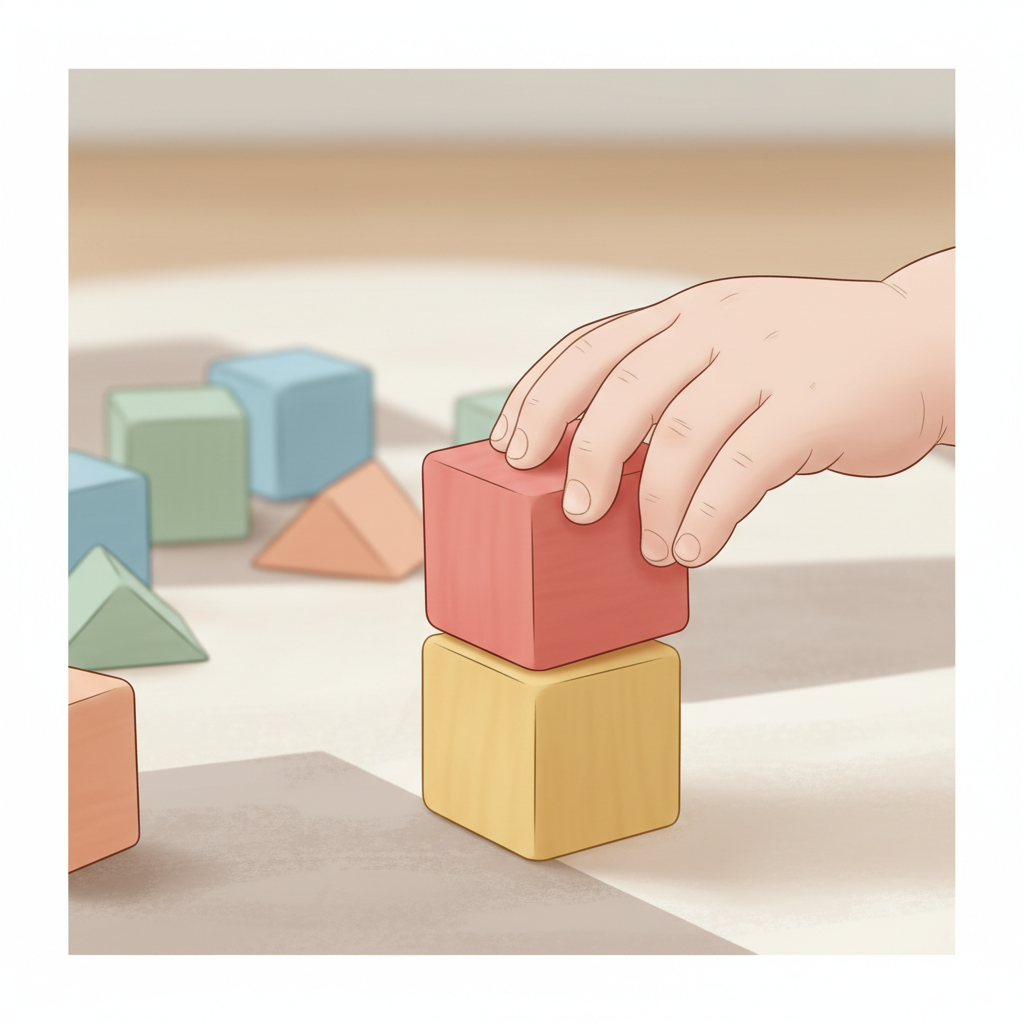
My 2-Year-Old Only Stacks Blocks? How to Encourage Building
Before diving into the wonderful world of toddler block play, take a moment to simply observe your child. Watch their hands as they reach for those colorful shapes. Notice the intense focus as they select one, then another, carefully placing it atop the first. This simple act of stacking, so captivating to a two-year-old, is far more than just stacking. It’s a fundamental step in their incredible journey of development, and it’s the starting point for so much more.
If your primary concern is that "my 2-year-old only stacks blocks, not building with them," rest assured, this is a very common and developmentally appropriate phase. At around 2 years old, a child’s brain and body are finely tuned to explore cause and effect, refine motor skills, and understand spatial relationships. Stacking is a concrete way to engage with these concepts.
The Incredible Journey of Stacking
This fascination with stacking is not a sign of limitation; it’s a celebration of emerging abilities. For a two-year-old, stacking blocks offers a tangible way to experience a world of physics in action. Each block placed is an experiment, a test of balance and gravity.
The Developmental Stage of Stacking
Around 18 months to 2 years, most children begin to show an interest in stacking. They might start with two blocks, eventually progressing to three or four. This ability to grasp, hold, and deliberately place an object on top of another is a significant fine motor achievement. The child is learning about precision, hand-eye coordination and the visual-motor integration needed to execute these delicate maneuvers. It requires a level of control and concentration that develops over time.
Why Your 2-Year-Old Loves Stacking
At this age, the child is an explorer of their physical environment. The cause-and-effect inherent in stacking is incredibly rewarding. They place a block, and it stays. They place another, and the tower grows. This predictability builds confidence and reinforces their growing understanding of how the world works.
It’s also a form of symbolic thought taking root. The tower represents something they are creating, even if it’s not yet a recognizable object. The process of building it is the primary joy.
What "Building" Looks Like for a Two-Year-Old
When we think of "building," we often picture elaborate houses or vehicles. For a two-year-old, "building" often looks like very simple structures. It might be a tower of blocks, or perhaps a few blocks placed next to each other. They are learning about concepts like 'on,' 'next to,' and 'under.'
The focus is often on the action of placing blocks and the visual outcome of that action, rather than replicating something specific from their environment. The child-led exploration of how blocks fit together is the essence of early childhood block play development.
Beyond the Tower: Nurturing Creative Construction
Observing your child stack is a beautiful window into their current developmental stage. But how can we gently guide them towards more varied and imaginative construction without derailing their current joyful explorations? The key lies in a prepared environment and a supportive, pressure-free approach.
Introducing Open-Ended Toys
The Montessori approach emphasizes "open-ended" materials – items that can be used in multiple ways. Blocks themselves are wonderfully open-ended, but the type of blocks can also influence play. Beyond traditional wooden blocks, consider introducing:
- Loose parts: Found objects like large pinecones, smooth stones, sturdy cardboard tubes, fabric scraps, or large wooden spools. These invite unique connections and problem-solving.
- Different block shapes: Think about architectural blocks, hexagonal blocks, or even large Duplo-style bricks if you haven't already. Varying the shapes can inspire new configurations.
- Natural materials: While not strictly "toys," large cardboard boxes, sturdy fabric tunnels, or even pillows can become part of a larger building project.
The goal isn't to overwhelm, but to offer variety and allow the child to discover new possibilities.
Modeling Creative Play (Without Pressure)
Children are keen observers. They learn by watching us. You can offer a gentle model for creative building, but it’s crucial to do so without directly instructing or taking over.
Instead of saying, "Let's build a house," try building alongside them. Perhaps you start a simple structure, and then pause, allowing them to add to it or change it. You might say, "Look, I made a long bridge," and then simply continue with your own creation.
The emphasis is on the process and shared experience, not the end product. If the child chooses to connect your "bridge" to their tower, that’s wonderful. If they ignore it and continue stacking, that’s equally valuable. The invitation is there, but the decision remains theirs. This is the essence of fostering creative building for toddlers.
Playful Interventions to Spark Imagination
Sometimes, a small addition to the play environment can unlock a new level of engagement. These aren't prescriptive activities, but rather gentle nudges that can encourage the child to see their blocks in new ways. Think of them as invitations to experiment further.
Adding Props to Block Play
Consider introducing a few simple props that can transform a block structure into something more. This is a fantastic way to encourage imaginative play for a 2-year-old.
- Figurines or small animals: A block tower can become a barn for a toy animal, or a castle for a small dinosaur.
- Vehicles: A ramp made of blocks can lead to a garage, or a bridge can span a "river."
- Dolls or stuffed animals: These can become inhabitants of a block house or inhabitants of a cozy block "bed."
- Small cloths or fabric scraps: These can be roofs, blankets, or even trees in a block landscape.
The child might not use these items in the way you expect, and that’s perfectly fine. The suggestion is to explore their capabilities.
Storytelling with Blocks
You can weave simple stories into the block play. This doesn't require elaborate planning. As the child builds, you might narrate their actions in a simple way.
"Oh, look! You are making such a tall tower. I wonder if a little bluebird will fly to the very top?"
Or, if they are building something more spread out:
"This looks like a wonderful road. Where do you think the little red car might drive today?"
This encourages the child to connect their physical actions with abstract ideas and narratives, further enriching their toddler block play development.
Toddler-Friendly Building Challenges
These aren’t tests, but playful suggestions. They are designed to spark curiosity and introduce new concepts without pressure. If your toddler is refusing to poop on the potty, there are other ways their development might manifest. Discover common reasons for this regression and gentle, effective strategies to rebuild their confidence and overcome fear.
- "Can we make a tunnel for the car?" This encourages building an archway or a space between blocks.
- "Let’s see if we can make something flat, like a path." This focuses on construction beyond vertical stacking.
- "What happens if we put a long block next to a short one?" This invites observation of size and proportion.
- "Can we make a 'house' for this little bear?" This provides a concrete goal for their building efforts.
The child may or may not engage with these "challenges," and their attempts will look unique to them. The important part is the invitation and the opportunity to explore.
Celebrating Milestones: What’s Next for Block Play?
As your child grows and their skills develop, you’ll begin to see subtle shifts in their block play. These are the exciting indicators that their capacity for imaginative construction is blossoming.
Signs of Imaginative Building Emerging
You might start to notice your child intentionally building something recognizable. For example, they might try to create a simple representation of a house with a roof, or an enclosure for a toy. This move from pure stacking or random placement to intentional representation is a significant leap.
You may also see them using blocks in combination with other toys to create a scene. A few blocks might become a table, with a toy figure sitting at it. This integrated play is a wonderful sign of developing imagination.
The Importance of Process Over Product
It's easy to get caught up in what the "finished product" looks like. As parents, we might be quick to praise a perfectly symmetrical tower or a quickly recognizable structure. However, the true value at this age lies in the process.
The joy your child finds in selecting blocks, experimenting with balance, and discovering how shapes fit together is the fertile ground for all future learning. Focusing on their effort, their concentration, and their problem-solving is far more beneficial than critiquing the final creation. This patient observation supports their journey towards more complex creative building.
A Gentle Nudge for Developmental Conversations
While your child’s block play is often a brilliant indicator of their development, it’s also wise to have a general awareness of broader developmental milestones. If you ever have concerns about your child’s overall engagement, language development, social interaction, or motor skills, it’s always a good idea to chat with your pediatrician.
General Developmental Milestones
Organizations like the American Academy of Pediatrics (AAP) offer guidelines for developmental milestones. These are not rigid checklists, but rather general indicators of progress. They cover areas such as gross and fine motor skills, cognitive development, language, and social-emotional growth.
If you have questions about your child’s progress in any of these areas, your pediatrician is your best resource. They can offer tailored advice and reassurance.
Focusing on Overall Engagement and Interaction
When observing your child, consider their overall engagement with their environment. Do they show curiosity? Do they interact with caregivers? Do they respond to their name? Are they exploring their world with their senses?
Concerns are less about what specific toy a child is playing with and more about the quality of their engagement and their ability to interact with others and their environment. If your child is happy, curious, and engaging, their block play, whether it’s stacking or building intricate designs, is a beautiful part of their unique developmental path.
Watching your child discover the world through play, whether it's the satisfying click of stacking blocks or the first tentative steps towards a more imaginative creation, is truly one of life's greatest gifts. Embrace the stacking for now, knowing each placed block is a foundation for what’s to come.